
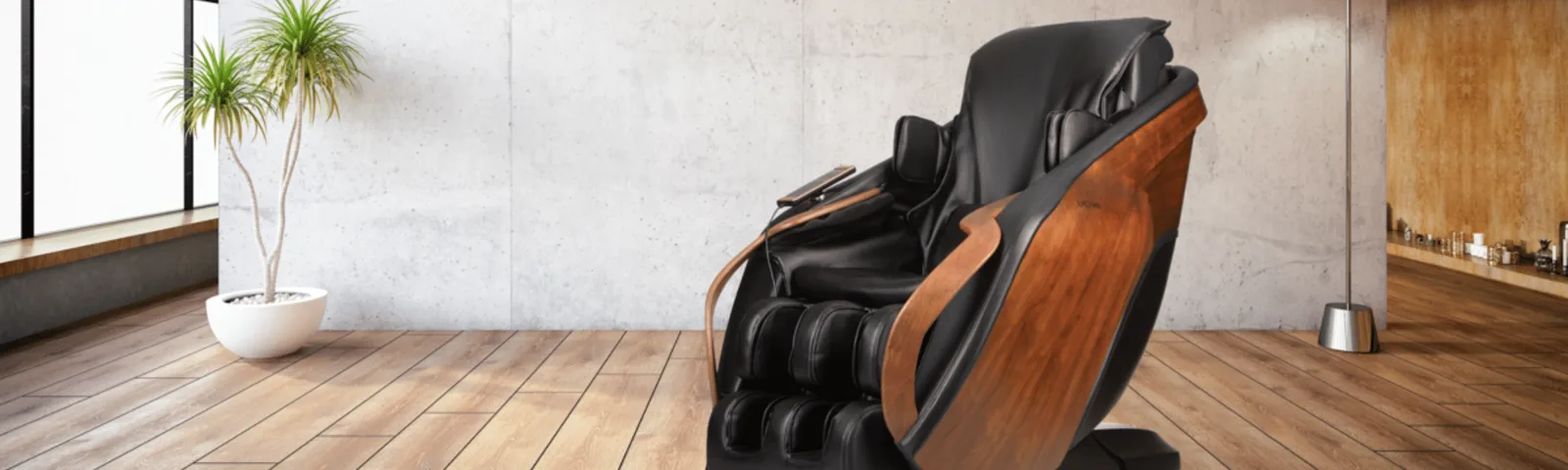
3D Massage Chairs
-
 Created By
Charles Stanley
Created By
Charles Stanley
Originally published on June 23, 2020.
Last updated on June 18, 2026.
Share this article:
Understanding 3D Massage Chairs: What They Are and Why They Matter
As modern life becomes increasingly demanding, people are seeking new and convenient ways to relieve stress, manage discomfort, and promote overall well-being. Among the many options available today, full-body massage chairs have earned a place in homes, offices, and wellness spaces around the world. Yet, while massage chairs may appear similar at a glance, the technology behind them can differ dramatically. One of the most important distinctions to understand when considering a massage chair is the number of dimensions in which its massage mechanism can move — typically categorized as 2D, 3D, or 4D.
But what, exactly, is a 3D massage chair, and why is this feature considered such an important advancement in massage technology? To answer that, it’s helpful to begin with a bit of background on how massage chairs evolved and how dimensional movement influences the quality, effectiveness, realism, and how you can customize a chair’s massage.
The Basics of Dimensional Movement in Massage Chairs
When we refer to 2D, 3D, or 4D massage chairs, the “D” stands for dimension — the directions in which the chair’s massage mechanism, typically a set of rollers mounted on a track, is capable of moving. These degrees of movement are inherent in the chair’s engineering and determine how well it can replicate the nuanced techniques of a skilled human massage therapist.
In a 2D massage chair, the rollers move in two directions: vertically (up and down) along the spine and horizontally (side to side) across the back. While this allowed early massage chairs to deliver a basic kneading or tapping sensation, it came with limitations. Most notably, 2D chairs lacked the ability to adjust the depth of the massage, which is essential for reaching deeper muscle layers, tailoring intensity, and helping to mobilize your spine.
The History and Limitations of 2D Massage Technology
In the early days of massage chair design, even the most advanced models on the market relied exclusively on 2D movement. In order to soften the experience or make it feel deeper, one had to physically add or remove padding from the chair’s backrest — an inconvenient and inelegant solution.
Today, 2D massage chairs still exist and remain widely available, especially in lower-priced models typically found for under $2,500. Most coin- or card-operated massage chairs in malls and airports use this older 2D technology, as do the majority of massage chairs placed in nail salons and casual public spaces.
While they can still provide a basic and relaxing experience, these chairs fall short of delivering the more variable, customizable, and immersive massages now expected from higher-quality home and commercial massage chairs.
The Innovation of 3D Massage Technology
Recognizing the limitations of 2D movement, engineers and designers introduced 3D massage technology — a pivotal innovation in the field. In addition to moving up and down and side to side, 3D massage chairs incorporate forward and backward movement. This allows the rollers to protrude outward, pressing into the muscles and adjusting the depth of contact with the user’s back, neck, and shoulders.
This third dimension of movement represents more than just an added mechanical capability. It fundamentally changes the experience of the massage by allowing the mechanism to more effectively mobilize the spine, target deep muscle groups, and deliver a more human-like touch.
With 3D massage chairs, users can control the location and style of their massage AND its intensity — selecting a gentle surface massage or a firm, penetrating treatment based on personal preference.
Customization, Comfort, and Longevity
One of the most appealing aspects of 3D massage chairs is the high degree of customization they afford. Using an intuitive remote or touchscreen interface, users can typically choose from a range of depth settings, allowing them to fine-tune the pressure of the rollers. This is particularly valuable in households or workplaces where multiple people might share the chair, as each individual can program the chair to suit their own comfort level and therapeutic needs.
Moreover, people’s tastes and tolerances often evolve. A massage setting that feels intense to a novice may soon begin to feel mild as the body acclimates to regular massage.
3D technology enables a chair to grow with its user, offering the flexibility to change intensity as preferences change.
The Importance of Well-Designed 3D Programming
Not all 3D massage chairs, however, are created equal. The effectiveness and realism of a 3D massage depend not only on the mechanical range of motion but also on the quality of the chair’s programming. (Indeed, a well-thought-out 2D massage chair is always going to be better than a poorly organized 3D massage chair.) A carefully engineered 3D massage chair will use the added dimension to add nuance and complexity to the movements, dynamism, and natural-feeling motions that approximate the techniques of a skilled massage therapist.
When properly executed, the in-and-out motion of the rollers can enhance traditional massage styles such as kneading, tapping, and shiatsu by adding a sense of depth and variation. This makes the massage feel more organic, as though it’s being delivered by human hands rather than by a machine. Many of these “tweaks” to the 3D actions – especially the intensity – can be modified through options on a remote.
The best 3D massage chairs are designed by experienced engineers and wellness professionals, often undergoing extensive testing, long development timelines, and many rounds of refinement to ensure that the movements feel both therapeutic and soothing.
3D as a Standard in Premium Massage Chairs
In today’s market, 3D massage technology has become a basic feature of higher-end massage chairs. Nearly all higher-end, full-featured models include 3D capabilities as standard, reflecting both consumer demand and the industry’s recognition of its importance in delivering an effective, customizable, and lifelike massage experience.
Beyond that, some manufacturers have further enhanced 3D technology by introducing 4D massage systems, which build on the three physical dimensions by adding a variable speed component. This allows rollers not only to move in three directions but also to dynamically adjust their speed mid-stroke, imitating the subtle pauses and accelerations of a human massage therapist’s hands.
Final Thoughts
In summary, 3D massage chairs represent a crucial advancement in massage chair technology, offering users deeper, more adjustable, and more authentic massage experiences than their 2D predecessors. The addition of forward and backward roller movement allows for greater control over intensity and depth, improves spinal mobilization, and opens up new possibilities for therapeutic and relaxation benefits.
As a result, 3D technology has become an essential feature of any serious, high-quality massage chair — an investment not just in luxury, but in personal wellness, comfort, and long-term stress relief. For anyone considering a massage chair for home or business use, understanding the advantages of 3D massage technology is vital to making an informed, rewarding choice.
As always, when it comes to massage chairs, NOTHING beats a proper in-store experience. 2D, 3D, 4D….12D…none of the hot-button terms of the moment matter more than what your body and mind tell you while you actually and personally experience a massage chair.
If there’s one thing every shopper should keep in mind, it’s this: Do your massage chair shopping in a store. There’s no better guide and no better way to ensure a happy outcome.

Charles Stanley
Marketing Director
Charles is the Director of Marketing for Furniture For Life Massage Chairs. As a frequent contributor to the Furniture For Life blog, he is dedicated to helping shoppers make well-informed decisions to improve their health, wellness, and happiness by providing insights into massage chair benefits, technology, and functionality.

-
 Cliff Levin

Read the Body Massager Guide >

-
Charles Stanley
Explore Foot Massagers & Chairs >
-
Charles Stanley
Find Fibromyalgia Relief >
Step into one of our showrooms and feel the difference for yourself. Sit back, relax, and discover what true comfort really means.
- Chat with us